Solution coordination
LYNQNET helps define and align a solution implemented by the customer or designated delivery partners.
Systems Integration & Project Delivery
LYNQNET structures the technical, commercial, and delivery responsibilities that connect technology layers, implementation partners, sites, and acceptance criteria.
The hidden layer
A connectivity project can combine access, routing, switching, wireless, security, power, edge systems, logistics, field work, documentation, and ongoing operations.
LYNQNET helps define how those layers fit together, what must be validated, who owns each deliverable, and what evidence is required before the project is handed into operations.
Working scope
The integration scope is expressed through practical inputs, coordination responsibilities, and defined outputs rather than a broad promise to perform every discipline.
Translate the operating outcome, environment, users, constraints, and existing decisions into a documented multi-layer solution direction.
Defined output · Architecture and scope baselineMake interfaces, services, software, licensing, power, environmental, partner, and operational dependencies visible before delivery begins.
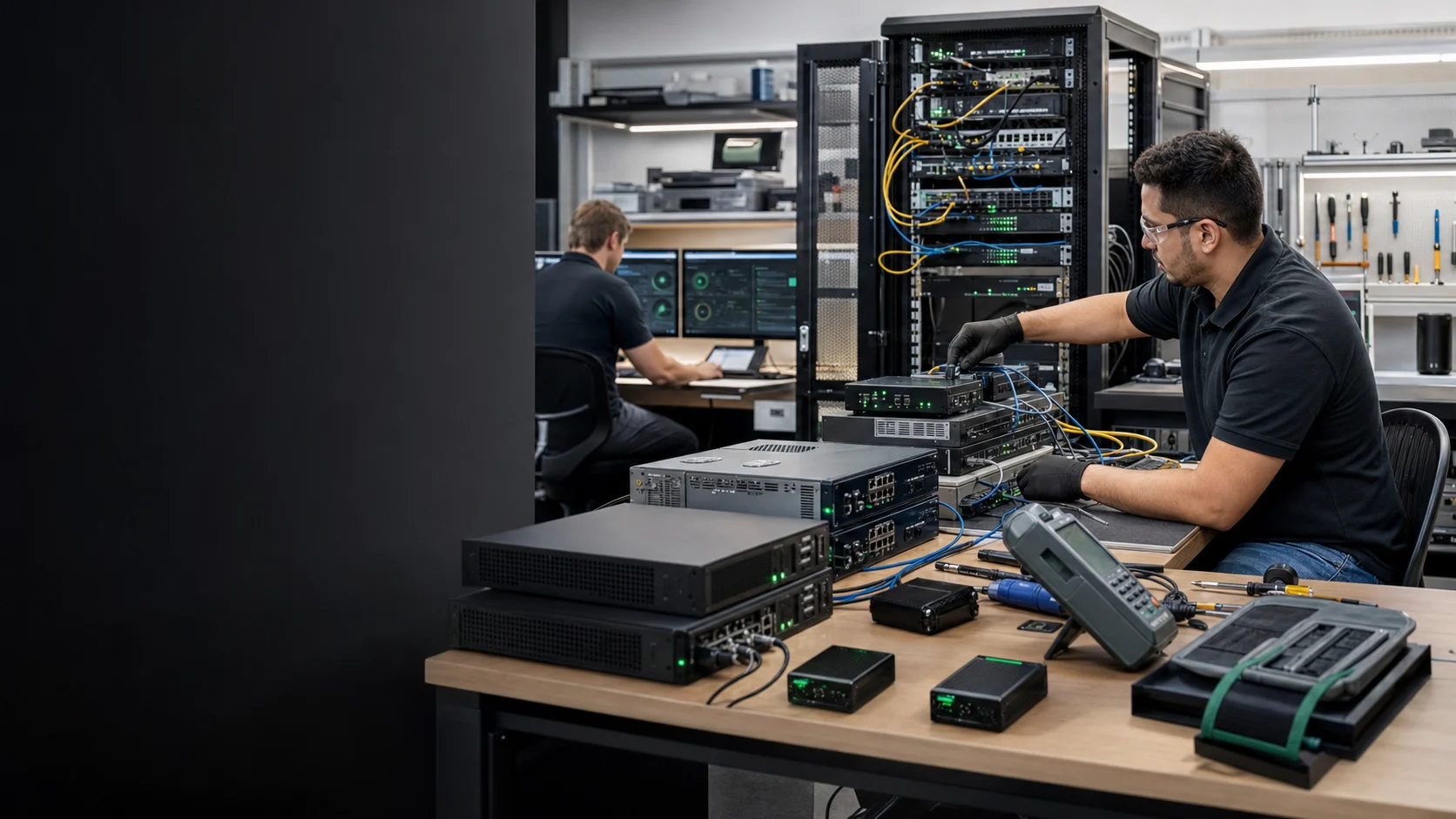
Defined output · Dependency and assumption registerDefine who will configure, label, assemble, verify, record, and release equipment using the appropriate qualified resources.
Defined output · Staging and verification planAlign customer teams, technology sources, specialists, field partners, logistics providers, and site constraints around one delivery sequence.
Defined output · Owned work packagesAgree the checks, evidence, exceptions, documentation, and handover conditions that demonstrate the confirmed scope is ready.
Defined output · Acceptance frameworkCoordinate architecture records, asset information, configuration status, operating notes, and ownership for the agreed handover.
Defined output · Handover recordStructured execution
Technical, commercial, logistics, site, and operational workstreams advance through shared decision gates instead of separate, disconnected plans.
Outcome, users, sites, environment, constraints, timing, stakeholders, and open decisions.
Architecture, technology categories, interfaces, assumptions, exclusions, and acceptance intent.
Work packages, responsibilities, dependencies, milestones, risks, evidence, and escalation.
Equipment readiness, configuration status, labeling, records, and verification checkpoints.
Site conditions, field activity, change control, issue ownership, and progress visibility.
Evidence, exceptions, documentation, operational ownership, and next-phase decisions.
Engagement models
LYNQNET helps define and align a solution implemented by the customer or designated delivery partners.
Technology supply is connected with agreed staging, configuration, documentation, testing, and delivery activities.
Qualified specialist or regional partners are coordinated against a shared technical and commercial scope.
Multiple workstreams are governed through visible milestones, decision gates, responsibilities, and communication.
Evidence and responsibility
Known conditions, assumptions, dependencies, and information still required are visible.
Every material deliverable, decision, exception, and acceptance action has an assigned party.
Planned, ready for review, accepted, and exception states are distinguished clearly.
Changes to scope, architecture, timing, responsibility, or evidence are evaluated before commitment.
Completion is tied to agreed records and results—not simply to equipment arrival.
Documentation, assets, open items, support boundaries, and next ownership are transferred deliberately.
Engineering, installation, electrical work, licensing, certification, security approval, managed service, and field responsibilities are confirmed for each engagement. The page does not imply that every discipline is performed directly by LYNQNET.
Practical answers
The answers describe LYNQNET’s normal coordination approach. The commercial, technical, legal, specialist, and delivery boundaries remain specific to each engagement.
Systems integration connects access, networking, equipment, software or service dependencies, configuration, site conditions, specialist partners, validation, documentation, and ownership into one deliverable project scope.
No. LYNQNET may coordinate a broader delivery scope, while engineering, installation, security, licensing, certification, managed service, or regional work is assigned to appropriately qualified parties.
Yes. The first phase can qualify the intended outcome, current decisions, known constraints, missing information, interfaces, responsibilities, and evidence required to establish an architecture and delivery baseline.
Completion is tied to the agreed acceptance evidence, documentation, recorded exceptions, asset or configuration status, support boundaries, and operational handover—not simply to equipment delivery.
Share the intended outcome, sites, users, existing architecture, technologies, partners, timing, constraints, assigned responsibilities, required evidence, and the next decision that must move forward.
Share the intended outcome, locations, technology context, timing, existing partners, assigned responsibilities, and the next decision that must move forward.
Start the conversation