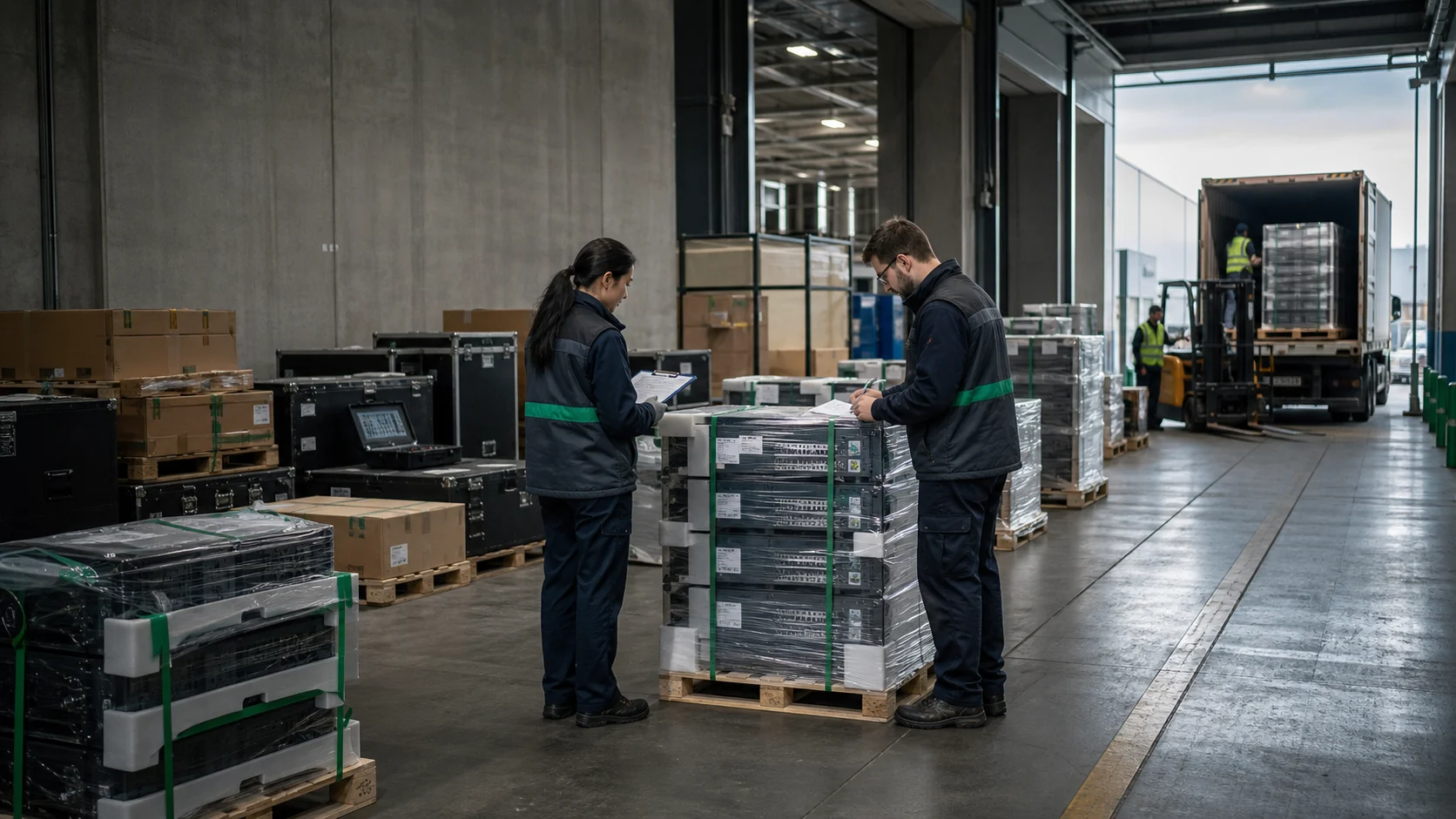
Multi-site equipment rollout
Repeated technology packages moving to multiple enterprise or infrastructure locations in controlled waves.
Project Logistics & International Trade
LYNQNET connects technology supply with documentation, delivery responsibilities, project milestones, destination requirements, and appropriately qualified logistics resources.
The shipment is not the outcome
Connectivity and infrastructure projects can involve fragile equipment, multiple suppliers, serialized assets, accessories, service dependencies, staged deliveries, remote destinations, and site-specific acceptance requirements.
LYNQNET treats the route as part of the project scope—not as an afterthought once equipment is ordered.
Working scope
A qualified route starts with the equipment, parties, commercial basis, destination reality, and the evidence required at receipt.
Identify collection points, final destinations, intermediate staging, site access, receiving conditions, and known route constraints.
Defined output · Defined physical routeUnderstand quantities, dimensions, value, fragility, serialization, packaging, batteries, accessories, and any special handling conditions.
Defined output · Shipment requirement profileConfirm delivery basis, ownership transitions, payment milestones, insurance responsibilities, exclusions, and the parties named in the transaction.
Defined output · Responsibility baselineIdentify the commercial, transport, product, compliance, and receiving records expected for the proposed product and route.
Defined output · Document requirement registerConnect supply readiness, consolidation, transit, site readiness, installation, and acceptance milestones.
Defined output · Dependency-led scheduleDefine who receives, inspects, records condition or count differences, accepts delivery, and owns each exception at destination.
Defined output · Receipt and escalation planStructured execution
The strongest control sits before movement. Pre-dispatch readiness reduces avoidable exceptions and keeps the physical route connected to the implementation plan.
Requirement, destination, equipment profile, timing, parties, and current assumptions.
Supply, packaging, dimensions, documentation, dependencies, and responsibility basis.
Product, route, commercial, compliance, provider, receiving, and specialist questions.
Counts, condition, records, packaging, documents, contacts, milestones, and exceptions.
Movement milestones, communications, deviations, decisions, and destination readiness.
Condition, count, discrepancies, acceptance, storage, implementation handoff, and closure.
Relevant project types
Repeated technology packages moving to multiple enterprise or infrastructure locations in controlled waves.
Deliveries where access, timing, local storage, power, receiving, and installation readiness require close coordination.
Related technology categories combined into an ordered staging or delivery sequence without losing item-level ownership.
Initial or recurring supply into a market that needs a defined commercial, documentation, partner, and logistics model.
Evidence and responsibility
Core equipment, accessories, dependencies, quantities, and documents are reviewed as one requirement.
Packaging, handling, loading, storage, access, and exception conditions reflect the equipment profile.
The records expected by the agreed route, parties, project, and destination are identified before dispatch.
Commercial, movement, customs, insurance, receiving, discrepancy, and acceptance roles are named.
Supply, staging, transit, site readiness, installation, and acceptance milestones are connected.
Changes and exceptions have a defined communication and decision path before they block the project.
Unless specifically contracted and verified, LYNQNET does not present itself as the carrier, customs broker, importer of record, exporter of record, insurer, tax adviser, or legal adviser. These responsibilities may be coordinated through appropriately qualified providers and are defined per transaction.
Practical answers
The answers describe LYNQNET’s normal coordination approach. The commercial, technical, legal, specialist, and delivery boundaries remain specific to each engagement.
Technology project logistics connects equipment readiness, packaging, documentation, commercial responsibilities, transport milestones, destination conditions, receipt, discrepancies, and implementation timing around a defined project route.
Not unless specifically contracted and verified. Carrier, customs brokerage, importer, exporter, insurance, tax, and legal responsibilities may require appropriately qualified providers and are assigned for each transaction.
Product dimensions, batteries, value, fragility, packaging, documentation, destination access, receiving capability, timing, and commercial responsibilities can change the viable supply and delivery plan.
Yes, where appropriate. A coordinated plan can connect supplier readiness, item-level records, consolidation, staging, documentation, delivery sequence, site readiness, and ownership without obscuring the individual supply basis.
Provide the equipment profile, quantities, origin, destination, required timing, delivery basis, packaging or handling needs, destination conditions, receiving party, and any logistics or implementation providers already assigned.
Share the equipment, quantities, origin, destination, required timing, site context, delivery basis, and any responsibilities or providers already assigned.
Start the conversation